
Reconnecting with your inner-child can be an important part of healing
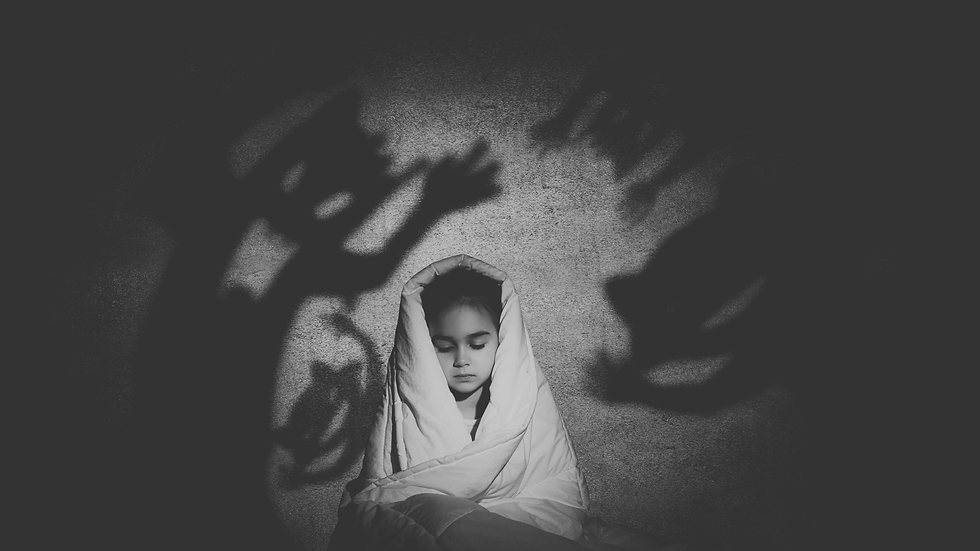
Have you ever found yourself reacting to a situation and wondered, "Why did that affect me so much?" Perhaps you felt overwhelmed by criticism, found it difficult to say no, worried someone was angry with you, or became upset by something that, afterwards, seemed quite small. Maybe you've even caught yourself saying, "I know I'm overreacting, but I can't seem to stop it."
For many people, these reactions can feel confusing. We know we're adults, yet sometimes our emotions seem much bigger than the situation in front of us.
Often, there is a reason for that.
The child we once were doesn't simply disappear
Reconnecting with your inner-child is an important part of healing. When I talk about our inner child, I'm talking about the younger parts of us that were shaped by our earliest experiences and relationships. As children, we learned about safety, love, connection and belonging long before we had the words to explain what was happening around us.
Our nervous system was constantly taking in information:
Was it safe to express emotions?
Could we ask for comfort when we were frightened?
Did we feel seen, understood and accepted?
Or did we learn that staying quiet, becoming independent, keeping everyone happy or hiding our feelings helped us get through?
Those experiences don't simply disappear because we grow older. Instead, they can quietly influence how we experience ourselves, other people and the world around us.
We adapted because we had to
One of the things I often say to clients is that I don't believe we're broken. I believe we adapted. Children are incredibly resourceful. They find ways to survive the environments they're growing up in. For example:
The child who learned that expressing emotion wasn't welcomed may grow into the adult who struggles to show vulnerability.
The child who felt responsible for everyone else's happiness may become the adult who finds it almost impossible to put themselves first.
The child who had to cope alone may become fiercely independent, even when they desperately long for connection.
These aren't character flaws. They're often protective strategies that made perfect sense at the time. The difficulty is that what protected us as children doesn't always help us feel safe, connected or fulfilled as adults.
Sometimes the hardest person to feel compassion for is ourselves
One of the things I notice most often in therapy is that people can understand their childhood intellectually, but feel completely disconnected from the child who lived through it.
They say, "It wasn't that bad." "Other people had it much worse." "I don't remember much."
Or, "I don't really feel anything when I think about my childhood."
People are often surprised when I tell them that this can make a great deal of sense: if disconnecting from difficult emotions helped us survive, we wouldn't expect those feelings to suddenly become easily accessible in adulthood.
Sometimes that distance is part of the protection our nervous system developed.
Healing isn't about forcing ourselves to remember
People sometimes assume that healing means going back into painful memories or uncovering things they've forgotten.
That isn't how I see it. Healing isn't about forcing ourselves to revisit the past before we're ready. Nor is it about judging our parents or deciding that everything about our childhood was good or bad.
Most parents were doing the best they could with the understanding, resources and support they had. At the same time, our experiences still shaped us.
Both of those things can be true. The aim isn't to blame. It's to understand.
Because when we understand why certain patterns developed, we often begin to respond to ourselves with far more compassion and far less criticism.
Reconnecting with our inner child isn't about asking us to relive the past: it's about asking us to understand with compassion.
Reconnecting with the younger parts of ourselves
Sometimes, as trust and safety develop within the therapeutic relationship, we may gently begin exploring the younger parts of ourselves.
Not to overwhelm ourselves. Not to force emotion. And certainly not to rush towards painful experiences. But to begin understanding what those younger parts may have experienced, what they may have come to believe about themselves, and how those experiences might still be influencing life today.
For some people, this happens quite naturally. For others, it takes time. Sometimes people feel deeply connected to those younger parts of themselves. Others feel nothing at all. Neither response is right or wrong. Both can make sense.
The pace of this work is always important. Our nervous system lets us know when it feels safe enough to move towards something and when it needs us to slow down. As we begin to make sense of our experiences, it's not only our thoughts that can tell us something. Sometimes our body notices things long before our mind has found the words.
Our body often notices before our mind does
One of the things I often notice in therapy is that someone may be talking quite matter-of-factly about something that happened years ago, yet as they're speaking, their shoulders become tense, their breathing changes or tears begin to gather in their eyes.
They may not even realise it's happening.
Our body has a remarkable way of communicating with us. You might notice a tightness in your chest when you feel criticised, a knot in your stomach when someone doesn't reply to a message, or a lump in your throat when you're trying hard not to cry.
These sensations aren't something we need to analyse or immediately make sense of. They're simply information. They can help us become curious about how our nervous system is responding in that moment.
Sometimes those responses are connected to what's happening right now. Sometimes they're connected to something much older.
This isn't about assuming that every physical sensation is linked to childhood, nor is it about searching for hidden memories. Rather, it's about recognising that our body can gently let us know when something feels familiar, even if we don't yet understand why.
Over time, and when enough safety has been established, paying attention to these responses can help us understand ourselves with greater compassion. Not because our body holds all the answers, but because it can offer us another way of listening to ourselves.
Like so much of healing, this isn't about pushing ourselves to go deeper than feels manageable. It's about noticing, slowing down and allowing curiosity to replace self-criticism.
From self-criticism to curiosity
One of the biggest shifts I see in therapy is when people stop asking, "What's wrong with me?" and begin asking, "I wonder what my nervous system learned that led me to respond this way?"
That question changes everything.
Instead of seeing ourselves as broken, difficult or too sensitive, we begin to understand that our reactions often developed for a reason. And if they developed for a reason, they can begin to change.
Healing begins with compassion
Reconnecting with our younger selves isn't about becoming someone different. It's about understanding ourselves more fully. It's about recognising that the ways we learned to survive were often incredibly intelligent responses to the circumstances we found ourselves in.
Sometimes healing begins simply by recognising that there was once a child who was doing the very best they could with the experiences, relationships and resources available to them.
Not because we need to stay in the past. Not because we need to relive painful memories. But because understanding that child with compassion can help us understand ourselves today.
Perhaps that's where healing really begins.
Not by asking, "What's wrong with me?" but by gently wondering, "What happened to me?"
And then, with enough safety and support, "What do I need now?"
Healing isn't about finding the deepest wound. It's about creating enough safety that we no longer have to protect ourselves from it.


Comments